Social Media for Illustrators (The Truth)
Author: Darren Di Lieto · Illustrator: Beach ·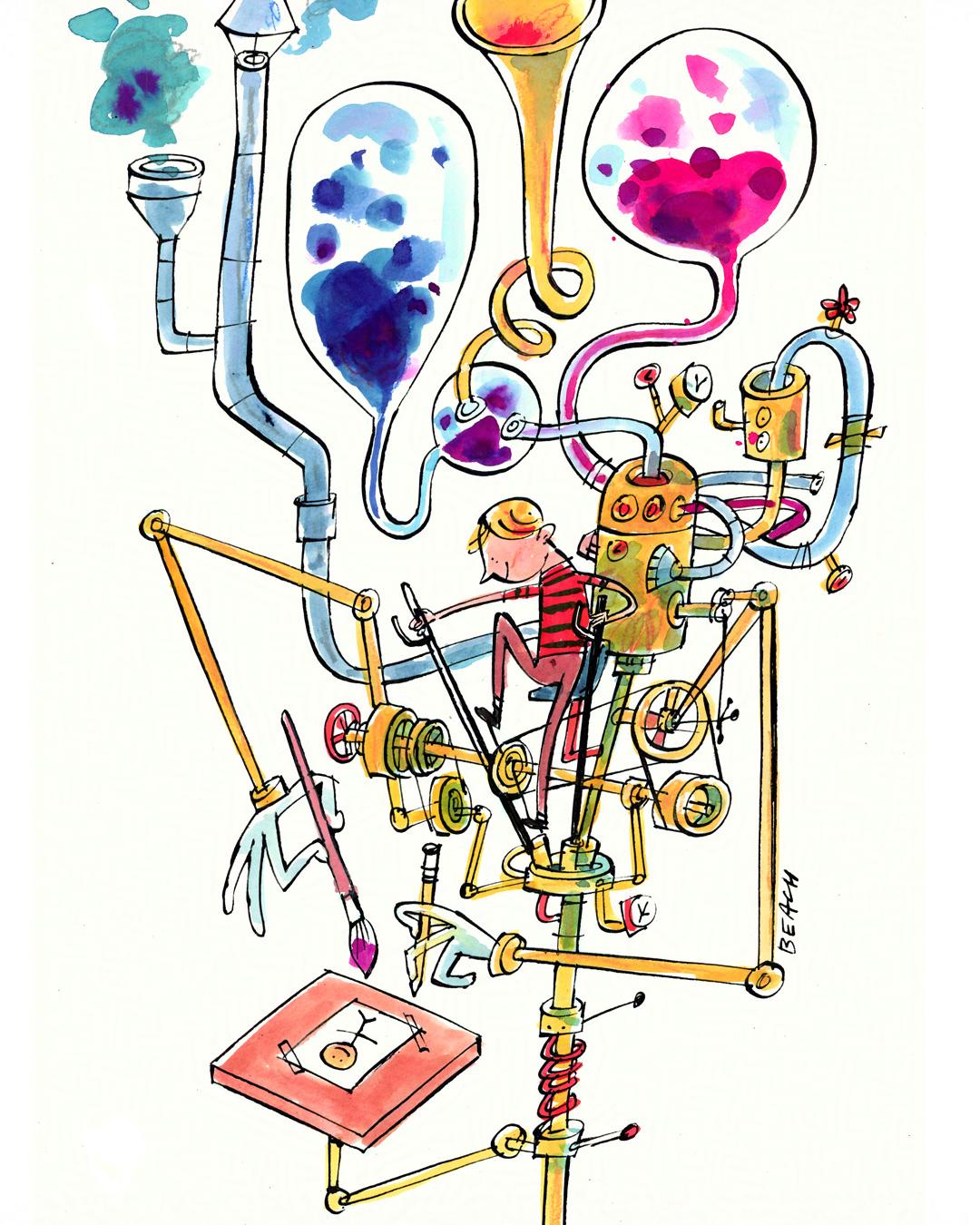 Artwork by Beach
Subconsciously, it is easy to forget there is a much bigger world out there, and we are not the primary consumer market. This is especially true on social media platforms, which largely view us as a means to an end during their growth phases.
Now, for a Bit of Context
Modern social media algorithms are a blight on the internet. They serve shareholders, advertisers and billionaires first. That is not a conspiracy theory. That is their business model. Social platforms optimise for engagement because engagement increases time on site, and time on site increases advertising revenue. If you want a breakdown of how this works, Appinventiv (IT consulting firm) explains it in general terms.
Algorithms are designed to prioritise content that keeps users scrolling, reacting and arguing. The Human Journey has covered how algorithmic amplification shapes what we see.
We like to pretend we live in a free market utopia of healthy competition. We do not. We live in platform capitalism. The language of competition is often rolled out as marketing copy or as a defence when a monopolistic corporation is accused of manipulating the market.
We missed the golden age of a decent internet. Greed won.
Sorry. Did I say the quiet bit out loud?
With that context in place, let’s talk about how to survive this mess.
What Actually Happens
From experience, posting a meme on social media can get hundreds, sometimes thousands, of likes. Post an original illustration and link to the artist’s portfolio and you might see five to fifteen likes. That discrepancy is not a reflection of the quality of the artwork. It is the algorithm.
There are exceptions. There are always exceptions. A handful of creators break through and achieve extraordinary reach. The common narrative is that anyone can do the same if they just work hard enough. That idea is comforting. It is also mostly rubbish.
Hard work matters. Timing matters. Luck matters. The platform matters. Format matters. Not everyone is playing on a level field. The exceptions are amplified because they are useful. They reinforce the dream. They keep everyone else producing free content for the machine.
And buying into aspiration is easy. Who does not want love, visibility and success?
The Problem and Why
If your status update is not actionable, you are not inviting the viewer to do anything specific. An actionable post asks someone to click a link, send a direct message, commission a project or join a mailing list. If you are not asking for action, you are feeding the network. Non-actionable content is perfect for social platforms because it keeps users scrolling. The longer users scroll, the more adverts they see. The more adverts they see, the more money the platform makes.
The “like” button is not there to validate you. It is there to condition behaviour. There is solid research on how social media triggers dopamine responses and reinforces habitual use. Everything Aberystwyth has written about it here.
When someone likes a non actionable post, they often have no idea who posted it. They consume it, react to it, then forget it. That forgetfulness is by design. Endless scrolling is not a bug. It is a feature. Doomscrolling is profitable.
And when I say “users,” I do not mean other illustrators who can identify an artist by brushstroke alone. I mean everyday users. The majority. The people who like pretty pictures but are not actively hunting for illustrators to hire.
The Potato Problem
This is also why your cousin can post a photo of a potato and get twenty likes from fifty connections, while you get three likes from several thousand followers on a piece that took over one hundred hours to create. Social posts do not exist in isolation. They are part of a profile ecosystem. Your previous engagement, your audience’s behaviour, your posting patterns and the platform’s current priorities all influence who sees what.
Think of it as momentum. It is a complex web of conditions that decides whether your follower even sees your update. One uncomfortable truth is this: the more value you give the platform by creating content that keeps people there, the more the platform may reward you with reach. For freelancers, that creates a tightrope.
Influencer vs Freelancer
If you want to be an influencer, the relationship with the platform can be symbiotic. High engagement is the product. You are aligned with the network’s goals. If you are a freelancer trying to earn a living, your goals are different. You need enquiries, commissions and clients.
Non-actionable posts will usually receive more views. However, views and likes do not pay invoices. Unless likes are the goal, which is understandable because they do give a psychological boost, actionable content is far more valuable in practical terms.
There is no shame in enjoying the dopamine hit of a like. Just do not confuse it with progress.
Understanding this relationship allows you to work within the system without being emotionally wrecked by it. When you know the rules, you can decide when to play and when to step away.
It Is Not Brain Science
This is not brain surgery. Social media is designed to be addictive. It is easy to get pulled in and slowly trained by algorithms. Do not let it rot your brain.
Use it deliberately. Use it strategically. Build your client list. Push people toward your website. Grow your mailing list. Protect your independence. And remember, social media is not the be all and end all. Email newsletters work. Direct mailers work. Cold calling still works if you are brave enough to do it. Real relationships work.
From Us to You
Profit-driven social media is only one of many reasons why independent communities like Hireillo matter. We are a community. We do not have overlords. Every member matters. Social media does not care about you, it cares about attention metrics. We care about illustrators.
And for your own sanity, once in a while, close the laptop, go outside and touch the grass.
Seriously, go outside and touch grass.
Darren Di Lieto is the founder and creative director of Hireillo, aka Hire an Illustrator, a community and service for illustrators which was established in 2005. He spends his days (and many evenings too) advising, promoting and helping illustrators find commissions, while guiding them to further their careers and maintain professional standards.
darrendilieto.com / Mastodon / Instagram / LinkedIn
The Artist Machine illustration by Beach.
Disclaimer: The opinions shared by our freelance authors and the comments published below may or may not reflect the views of Hireillo Limited and our staff.